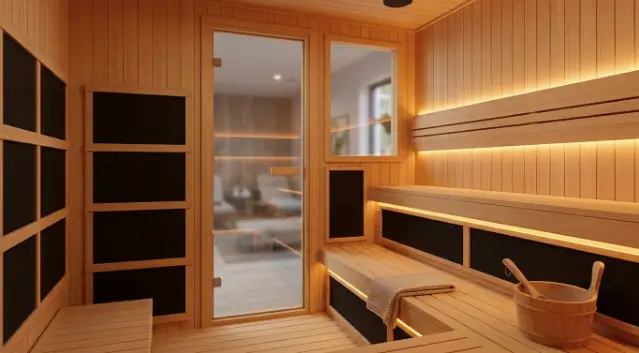
An infrared sauna can run through a genuinely cold winter, but where you place it changes almost everything about the experience: warm-up time, electricity use, and how much upkeep the cabin needs between sessions. An outdoor pad exposed to freezing temperatures and an insulated garage or shed produce two very different winters for the same cabin. Before you commit to a spot, it’s worth comparing both against your climate and your patience for a longer warm-up.
Outdoor Pad vs. Insulated Garage: Which Handles Cold Better?
An outdoor cabin left exposed to winter air starts every session from whatever the ambient temperature is, which might be 20 degrees or lower depending on where you live. That cold soak means the wood interior, the carbon or ceramic panels, and the floor are all starting from near-freezing, so the cabin needs meaningfully longer to reach a comfortable session temperature. An insulated garage or shed, even one that isn’t heated, buffers a lot of that swing simply by blocking wind and holding residual warmth, so the cabin’s baseline temperature before you switch it on tends to sit 15 to 25 degrees higher than the outdoor air on a cold night.
There’s also the physical wear angle. Snow load on a cabin roof, ice forming around a door seal, or repeated freeze-thaw cycling on exterior wood all add maintenance that a garage or shed placement avoids entirely. If you already have covered space, even an unheated one, it’s usually the easier winter setup.
How Much Longer Does Warm-Up Take in the Cold?
In a 70-degree garage, a typical two-person infrared cabin reaches operating temperature in roughly 10 to 15 minutes. Move that same cabin outside on a night near freezing, and warm-up commonly stretches to 20 minutes or more, sometimes longer in a hard wind. Part of that gap is physics: the panels are heating a cabin interior, and the colder that interior starts, the more energy and time it takes to get it comfortable. If you’re the type who wants to sit down and start a session within minutes of deciding to, that difference matters more than it sounds like on paper.
This is also where door seals and insulation quality separate cabins that handle winter well from ones that don’t. A tightly sealed door and a well-insulated wall panel hold heat between uses and cut down on how much the cabin has to fight outdoor air infiltration every single session.
Does Winter Use Cost More in Electricity?
Longer warm-up times mean the panels run longer before you step in, which does add a bit to the electricity used per session compared to a mild-climate setup. It’s not usually large amounts of money, since infrared panels still draw modest wattage, but a garage or shed placement narrows that gap considerably by starting warmer to begin with. If you’re comparing cabins specifically for a cold-climate installation, tighter door seals and better wall insulation matter more than raw panel wattage, and it’s worth checking those construction details directly rather than assuming every cabin performs the same in winter. Looking at insulation and sealing specs across a few current models, such as what’s listed in SweatDecks’ lineup, is a reasonable way to compare that before you buy rather than after your first freezing-night session.
What Changes About Cleanup and Upkeep in Winter?
Condensation becomes a bigger deal once outdoor temperatures drop. A cabin that cools down close to freezing between sessions creates a bigger temperature swing when you step in and start sweating, so moisture from skin and breath tends to condense on the cold wood faster than it would in a summer setup that never fully cools off. Cracking a vent or door slightly after each session and letting the interior air out fully helps prevent that moisture from sitting and encouraging mildew over a long winter. This matters more for an outdoor cabin than a garage-housed one, since garage air stays milder and dries out faster on its own.
Wood floors and benches are also worth checking periodically through winter for any warping near the door seal, where cold outdoor air and warm interior air meet most directly. A quick visual check every few weeks catches problems early, before a small gap becomes a bigger seal or insulation repair.
Should You Preheat on a Timer in Winter?
Some infrared cabins include a delayed-start or scheduling feature, and it’s worth using it once temperatures drop. Setting the panels to begin warming 20 to 30 minutes before you actually plan to sit down closes most of the winter warm-up gap, so by the time you’re ready, the cabin is already close to your target temperature rather than starting cold the moment you step in. If your unit doesn’t have a built-in timer, a basic smart outlet with a schedule function does roughly the same job, though check your manufacturer’s guidance first, since some units advise against unattended heating cycles.
Snow and ice around an outdoor pad are worth a quick check before every session too. A dusting of snow on a walkway to the cabin door isn’t a big deal, but ice that’s built up on a step or landing is a genuine slip risk, especially right after a hot session when you’re moving from a warm interior into cold outdoor air. Keeping a small broom or scraper near the cabin for a fast clear-off before you go out takes a minute and avoids the kind of fall that’s far more common in winter sauna routines than people expect.
Which Setup Should a Beginner Choose?
If you have covered space, even unheated, use it. The difference in warm-up time, electricity use, and maintenance between a garage or shed placement and a fully exposed outdoor pad is large enough that most people who’ve tried both prefer the covered option once winter actually arrives. If an outdoor pad is your only option, look for a cabin rated for lower temperatures, prioritize tight door seals and solid wall insulation over any other spec, and plan on longer warm-up windows as simply part of the winter routine rather than something to troubleshoot.
Frequently Asked Questions
Can an infrared sauna sit outside in freezing winter temperatures?
Many cabins are rated down to around 0 to 20 degrees Fahrenheit, but check your specific unit’s cold-weather rating. Below that range, warm-up time increases and components can be stressed by freeze-thaw cycles.
Does a garage or insulated shed work better than an outdoor pad in winter?
Generally yes, since ambient swings are smaller, warm-up is more predictable, and there’s no snow or ice buildup on the cabin to manage.
Does cold weather make an infrared sauna take longer to heat up?
Yes. A cabin that heats up in 10 to 15 minutes in a 70-degree garage can take 20 minutes or more starting from near-freezing outdoor air.
Is condensation a problem for infrared saunas in winter?
It can be, especially outdoors, since moisture condenses faster on cold wood. Cracking a vent after each session and letting the cabin dry out helps.
Do I need a higher-wattage infrared sauna for winter use?
Not necessarily. Tight door seals and good insulation matter more, since heat loss through gaps is what extends warm-up time and raises electricity use.
References
- “Effects of heat and cold on health, with special reference to Finnish sauna bathing.” American Journal of Physiology, 2018. https://pubmed.ncbi.nlm.nih.gov/29351426/
- “Does the Combination of Finnish Sauna Bathing and Other Lifestyle Factors Confer Additional Health Benefits? A Review of the Evidence.” Mayo Clinic Proceedings, 2023. https://pubmed.ncbi.nlm.nih.gov/37270272/
- “Benefits and risks of sauna bathing.” The American Journal of Medicine, 2001. https://pubmed.ncbi.nlm.nih.gov/11165553/
By Trevor Nakamura